Doing makeup for the first time can feel a little overwhelming. There are primers, foundations, concealers, powders, blushes, eyeshadows, eyeliners—and somehow you’re expected to know what goes where.
The good news? You don’t need a huge makeup collection or professional skills to create a polished look.
The key is knowing how to do makeup step by step and, just as importantly, understanding the correct order in which to apply each product.
In this guide, you’ll learn a simple makeup routine for beginners, what products and tools you need, how to apply face and eye makeup, and how to adjust your routine for different skin types and occasions.
Quick answer: A basic makeup routine usually involves skin preparation, primer, foundation, concealer, powder, cheek products, brows, eye makeup, lip makeup and setting spray. You can add or skip steps depending on your skin, the occasion and the look you want.
What You Need to Do Makeup at Home
Before getting started, gather the products you’ll actually use. You don’t need every makeup product available.
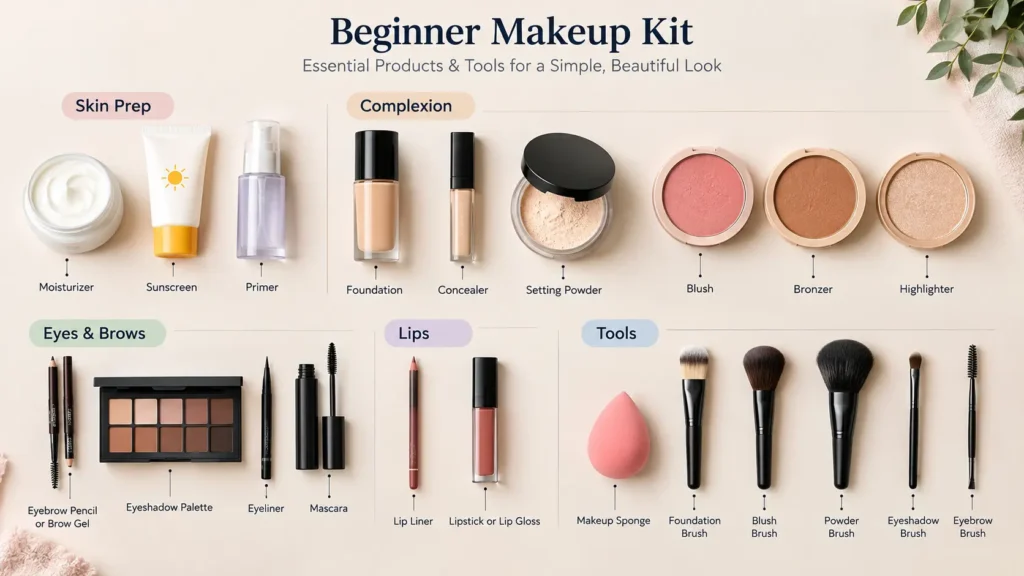
Essential Makeup Products for Beginners
Here’s a simple starter kit:
| Product | What it does |
| Cleanser | Removes dirt and excess oil |
| Moisturizer | Helps prepare the skin |
| Sunscreen | Protects skin during daytime |
| Primer | Creates a smoother base for makeup |
| Foundation or BB cream | Evens out the appearance of the complexion |
| Concealer | Adds targeted coverage |
| Setting powder | Helps set the base |
| Blush | Adds color to the cheeks |
| Bronzer/contour | Adds warmth or definition |
| Highlighter | Adds a luminous finish |
| Eyebrow pencil/powder | Defines brows |
| Eyeshadow | Adds color and dimension to the eyes |
| Eyeliner/kajal | Defines the eyes |
| Mascara | Defines and enhances lashes |
| Lip liner | Defines the lips |
| Lipstick/gloss | Adds color and finish |
| Setting spray | Helps finish the makeup look |
You can start with fewer products. For an everyday look, you might only need moisturizer, sunscreen, BB cream or foundation, concealer, blush, mascara and lipstick.
Basic Makeup Tools You Should Have
Your tools don’t need to be complicated either.
A beginner-friendly collection can include:
- Makeup sponge
- Foundation brush
- Powder brush
- Blush brush
- Eyeshadow brushes
- Angled brush for brows or eyeliner
How to Do Makeup Step by Step for Beginners
Now let’s get into the actual routine.
The easiest way to learn makeup is to follow the same basic order each time. Once you’ve practiced it a few times, you can change the routine to suit your preferences.
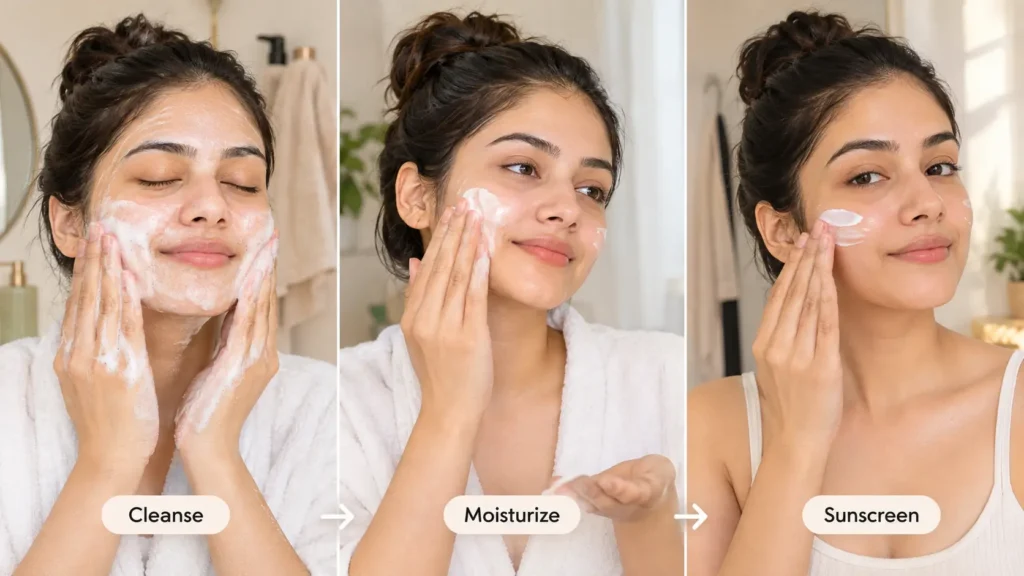
Step 1: Cleanse and Prep Your Skin
Start with clean skin.
Use a gentle cleanser to remove excess oil, dirt and leftover skincare. Pat your face dry rather than rubbing it.
Makeup generally sits more evenly when your skin has been properly prepared.
Tip: If your skin feels dry or tight after cleansing, give your moisturizer a little time to absorb before moving on.
Step 2: Apply Moisturizer and Sunscreen
Apply a moisturizer suited to your skin type.
For daytime makeup, follow with sunscreen. Give your skincare a little time to settle before applying makeup.
If your skin is dry, a comfortable moisturizer can help prevent your makeup from emphasizing dry-looking areas. If your skin is oily, choose products that feel comfortable without making your skin feel excessively greasy.
Should You Apply Sunscreen Before Makeup?
Yes, when sunscreen is part of your daytime skincare routine, it generally goes on before makeup.
Let it settle before applying primer or complexion products.
Step 3: Apply Primer
Primer is optional, but it can be useful depending on your skin and the makeup look you’re creating.
Apply a small amount to areas where you want makeup to look smoother or last more comfortably.
How to Choose Primer for Your Skin Type
For oily skin:
- Consider a lightweight or shine-controlling formula.
- Focus on areas that tend to become oily.
For dry skin:
- Consider a hydrating-feeling primer.
- Avoid piling on too many layers of product.
For combination skin:
- You can use different products on different areas if needed.
You don’t need a thick layer. A little product can be enough.
Step 4: Apply Foundation
Foundation helps even out the appearance of your complexion.
Start with a small amount and build coverage only where you need it.
How to Apply Foundation Step by Step
- Put a small amount of foundation on your hand or palette.
- Dot it lightly across your face.
- Blend from the center of your face outward.
- Pay attention to the jawline and hairline.
- Add another thin layer only where more coverage is needed.
A makeup sponge can give a softer finish, while a brush can provide more controlled application.
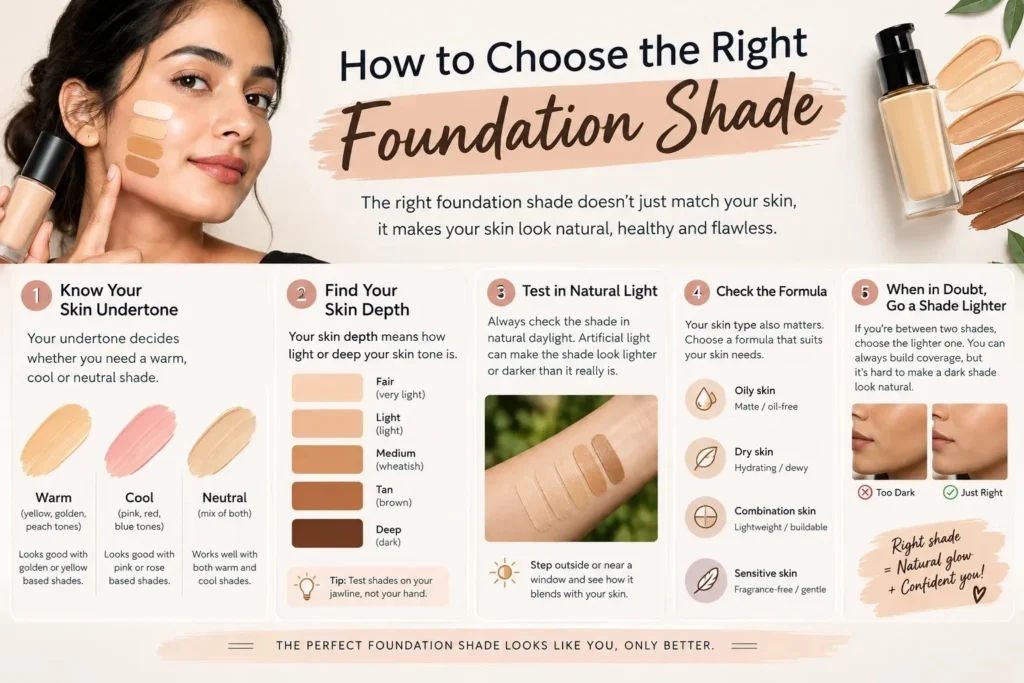
How to Choose the Right Foundation Shade
Choose a shade that blends naturally with your complexion.
If possible, compare the shade around your jawline rather than choosing one solely based on your hand.
Beginner tip: Avoid using a foundation that is significantly lighter or darker than your natural complexion just to change your skin tone.
Step 5: Apply Concealer
Concealer provides more targeted coverage than foundation.
You can use it under the eyes or on areas where you want additional coverage.
How to Apply Concealer
- Apply a small amount.
- Place it where coverage is needed.
- Blend the edges gently.
- Build coverage gradually.
The goal isn’t necessarily to cover your entire face with concealer.
Less product + good blending can often give you a more natural-looking finish.
Should You Apply Foundation or Concealer First?
For a simple beginner routine, applying foundation first can help you see where additional concealer is actually needed.
That can prevent unnecessary layering.
Step 6: Set Your Base With Powder
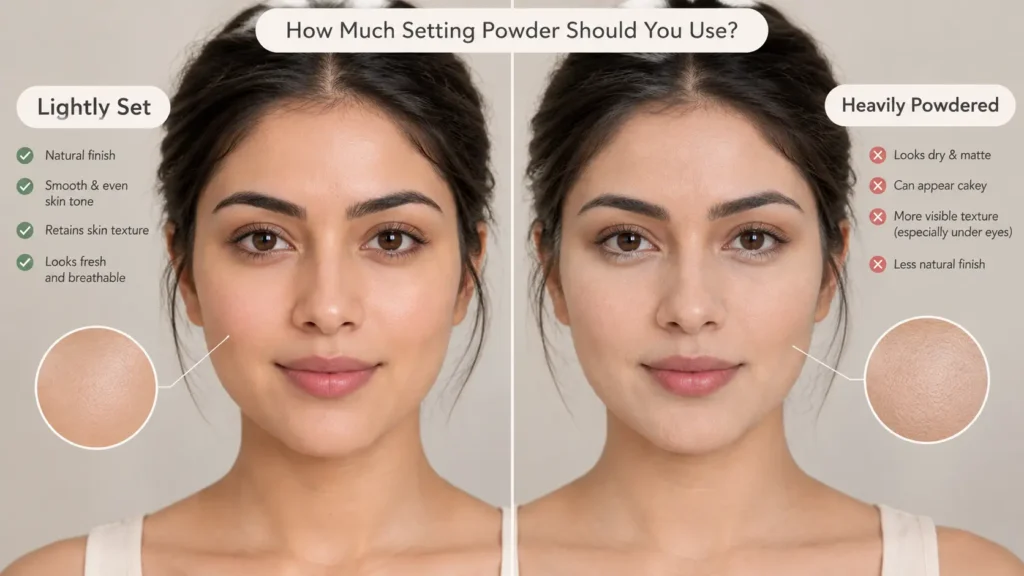
If you want to reduce shine or help your complexion makeup stay in place, apply setting powder.
You don’t necessarily need to powder your entire face heavily.
Instead, concentrate on areas that tend to become shiny or where makeup tends to move.
How to Avoid a Cakey Base
- Use a small amount of powder.
- Don’t repeatedly layer powder over wet products.
- Blend complexion products before setting them.
- Build coverage gradually.
Step 7: Apply Blush, Bronzer, Contour and Highlighter
Once your base is finished, you can add color and definition.
How to Apply Blush
Smile naturally and apply blush where it complements the shape of your cheeks.
Blend the edges so there are no obvious lines.
How to Apply Bronzer
Bronzer adds warmth to the complexion.
Apply it lightly to areas where you naturally want a warmer appearance.
How to Apply Contour
Contour is used to create the appearance of added definition.
Use a small amount and blend carefully.
How to Apply Highlighter
Highlighter can be placed on areas you want to bring forward visually, such as the high points of the cheeks.
Keep the application subtle for an everyday look.
Step 8: Do Your Eyebrows
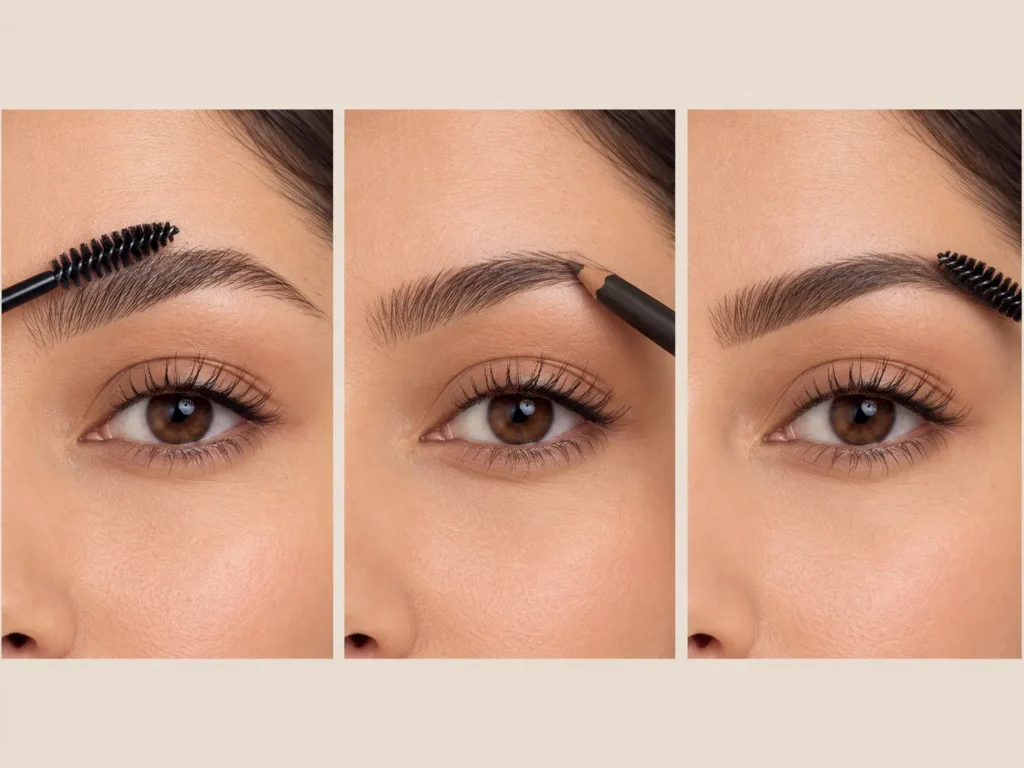
Brows frame the face, so even a simple brow routine can make your makeup look more finished.
Start by following your natural brow shape rather than drawing an entirely new shape.
How to Fill in Your Eyebrows Step by Step
- Brush the brow hairs into place.
- Lightly fill sparse areas.
- Use short, hair-like strokes.
- Concentrate more product toward areas that need definition.
- Blend or brush through the brows.
Avoid creating an extremely dark block of color at the front of the brows.
Step 9: Apply Eye Makeup
Eye makeup doesn’t have to be complicated.
For beginners, start with one or two eyeshadow shades, simple eyeliner and mascara.
How to Apply Eyeshadow Step by Step
Start with a light shade across the lid.
Then use a slightly deeper shade in the crease or outer corner and blend the transition carefully.
For a simple everyday eye:
- Light shade → eyelid
- Medium shade → crease
- Deeper shade → outer corner
- Light shimmer → center of lid, if desired
The most important part is blending.
How to Apply Eyeliner Step by Step
Start with a thin line close to your upper lash line.
If you’re new to eyeliner, don’t worry about creating a perfect wing immediately.
You can:
- Draw small dots or short strokes.
- Connect them gradually.
- Keep the line thin at first.
- Build thickness if you want more definition.
How to Apply Kajal
For a softer eye look, apply kajal close to the lash line and blend gently if desired.
How to Apply Mascara Step by Step
Place the mascara wand close to the base of your lashes.
Move it upward through the lashes while avoiding excessive product.
One or two controlled coats are usually easier for beginners than repeatedly applying mascara.
How to Do Winged Eyeliner
Winged eyeliner takes practice.
Start with a short line extending from the outer corner in the direction of the end of your eyebrow.
Then connect that line back toward your lash line and fill the small shape.
Don’t worry if both wings aren’t identical on your first attempt.
How to Create a Simple Smokey Eye
A beginner-friendly smokey eye doesn’t need five different shades.
Use:
- A light base shade
- A medium transition shade
- A deeper shade near the outer corner
- Optional shimmer
Blend each shade before adding more.
Step 10: Apply Lip Makeup
Lip makeup is one of the easiest ways to change the overall appearance of your look.
How to Apply Lip Liner
Follow your natural lip line first.
If you want slightly more definition, you can carefully extend the line, but avoid creating an obvious outline that doesn’t blend into your lips.
How to Apply Lipstick Step by Step
- Apply lip balm if your lips feel dry.
- Define the lips with liner if desired.
- Apply lipstick from the center outward.
- Press your lips together lightly.
- Clean up the edges if necessary.
For a softer everyday look, try a tinted balm or sheer lipstick instead of a highly pigmented formula.
Step 11: Apply Setting Spray
Finish your makeup with setting spray if you want to use one.
Hold the product at the recommended distance and mist it evenly over your face.
Allow it to dry rather than immediately touching your makeup.
And that’s your basic full-face makeup routine.
What Is the Correct Order to Apply Makeup?
The basic makeup order can look like this:
| Order | Makeup step |
| 1 | Cleanse |
| 2 | Moisturizer |
| 3 | Sunscreen |
| 4 | Primer |
| 5 | Foundation |
| 6 | Concealer |
| 7 | Setting powder |
| 8 | Bronzer/contour |
| 9 | Blush |
| 10 | Highlighter |
| 11 | Eyebrows |
| 12 | Eyeshadow |
| 13 | Eyeliner/kajal |
| 14 | Mascara |
| 15 | Lip liner |
| 16 | Lipstick |
| 17 | Setting spray |
This isn’t a rigid rulebook.
Your ideal order can change depending on the products you’re using and the type of makeup you’re creating.
Should You Do Eye Makeup Before or After Foundation?
Both approaches can work.
For a simple everyday look, many beginners find it easier to do the complexion first.
For dramatic eyeshadow, especially darker shades that may create fallout, doing the eye makeup first can make cleanup easier.
How to Do Simple Makeup Step by Step
You don’t need to complete all 17 steps every time you wear makeup.
For everyday makeup, simplify the routine.
A Quick 5-Minute Everyday Makeup Routine
Try this:
- Moisturizer + sunscreen
- BB cream or light foundation
- Concealer where needed
- Blush
- Brows
- Mascara
- Lip color
That’s it.
The idea is to enhance your features without making your routine unnecessarily complicated.
How to Do Light Makeup at Home
For a lightweight look, use thinner layers and choose products that provide the amount of coverage you actually need.
You can skip:
- Heavy contour
- Multiple eyeshadow shades
- Full-coverage foundation
- Dramatic eyeliner
A little blush, mascara and lip color can make a simple base look much more finished.
How to Do Natural-Looking Makeup
Natural-looking makeup isn’t necessarily about using no makeup.
It’s more about keeping the application balanced.
Focus on:
- Thin layers
- Well-blended edges
- A suitable complexion shade
- Soft brow definition
- Subtle cheek color
- A comfortable lip color
How to Do Makeup Step by Step for Different Skin Types
Your skin type can affect which products and techniques feel comfortable.
How to Do Makeup for Dry Skin
If your skin tends to feel dry, focus on comfortable skin preparation before makeup.
Try:
- Moisturizing before makeup
- Using thin complexion layers
- Avoiding excessive powder
- Blending gently
- Using hydrating-feeling formulas where appropriate
If foundation repeatedly emphasizes dry-looking areas, adding more foundation usually isn’t the solution.
Instead, reassess your skin preparation and application technique.
How to Do Makeup for Oily Skin
If your skin tends to become oily, focus on controlling shine without creating a heavy base.
Try:
- Lightweight skincare
- A suitable primer
- Thin foundation layers
- Powder on areas that need it
- Blotting excess oil before adding more makeup
Avoid repeatedly adding powder over significant oil buildup.
Blot first, then touch up if necessary.
How to Do Makeup for Combination Skin
Combination skin can have both oily and drier areas.
You don’t necessarily need to use the exact same amount of product everywhere.
Instead:
- Prep different areas according to their needs.
- Use less powder on dry-looking areas.
- Concentrate shine-control products where needed.
- Blend foundation evenly across the face.
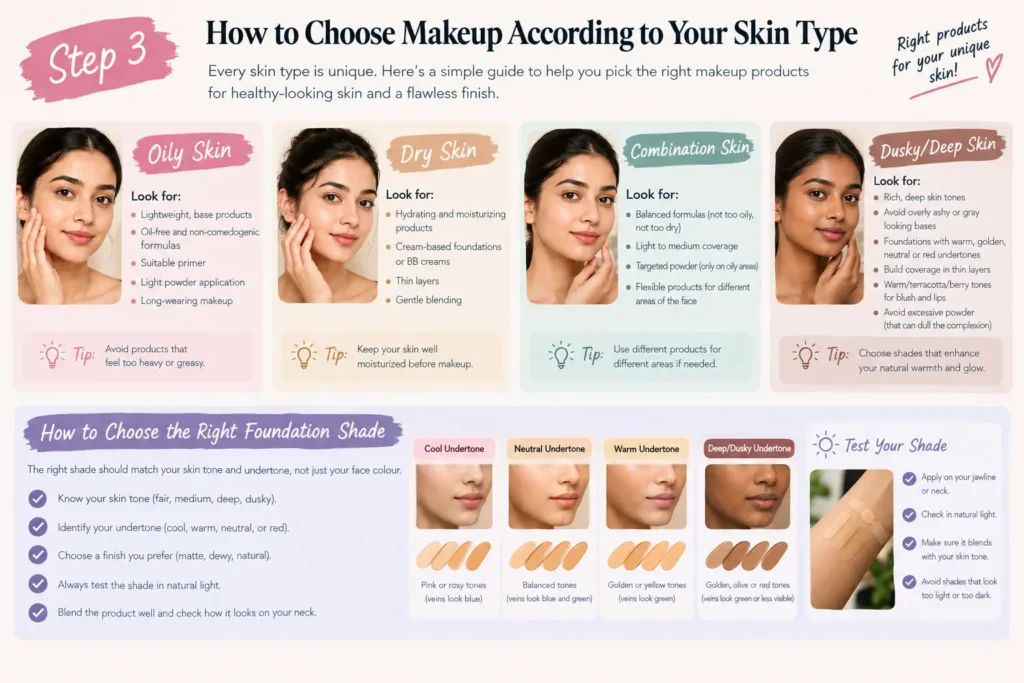
How to Do Makeup for Dusky and Dark Skin
The basic application process remains the same.
The most important consideration is choosing complexion products that work with your skin tone and undertone.
Foundation Tips
Don’t choose a foundation simply because it looks lighter.
Test shades carefully and, when possible, compare them around the jawline and neck.
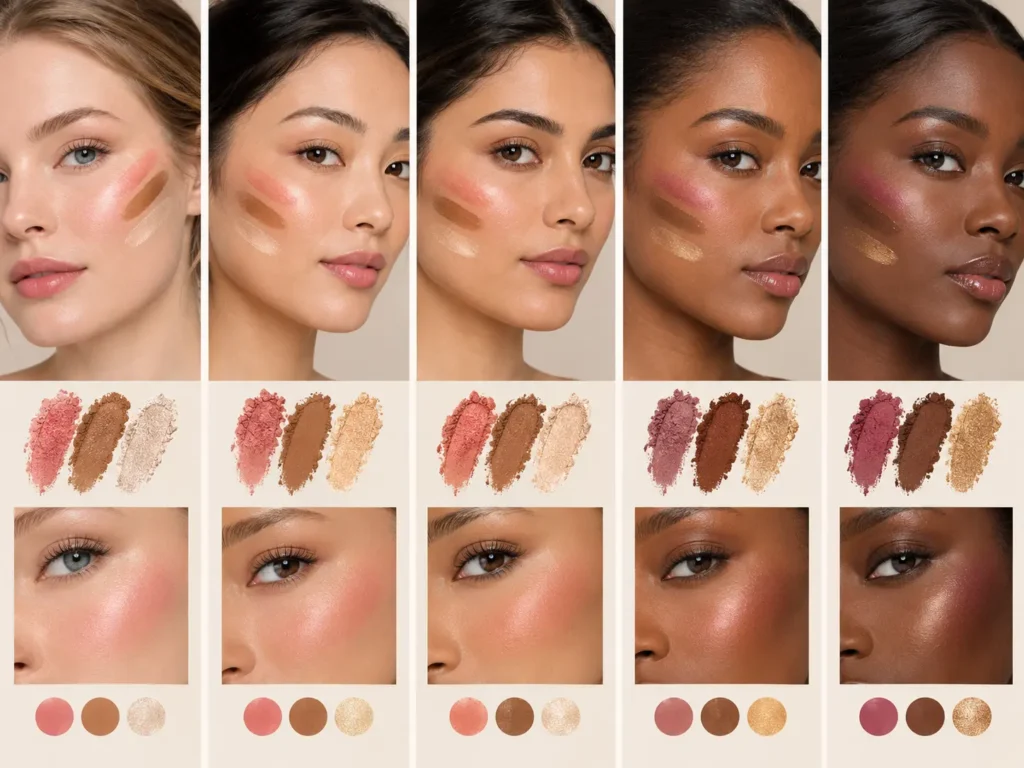
Blush, Bronzer and Highlighter
Don’t be afraid of color.
Choose shades that are visible enough to complement your complexion while still blending naturally.
How to Do Makeup for Different Occasions
Your makeup routine should change depending on where you’re going.
How to Do Daily Makeup Step by Step
For everyday makeup, keep things practical.
A simple routine might include:
- Skin preparation
- Light base
- Concealer
- Blush
- Brows
- Mascara
- Lip color
The goal is a comfortable look that doesn’t require constant maintenance.
How to Do Party Makeup Step by Step
Party makeup gives you more room to experiment.
You can add:
- More complexion coverage
- Defined brows
- Eyeshadow
- Eyeliner
- Highlighter
- A stronger lip color
If you’re using glitter, shimmer or darker eyeshadow, remember to blend carefully and check the final look in good lighting.
How to Do Wedding Makeup Step by Step
Wedding makeup usually needs to balance longevity with a polished finish.
Consider:
- Thorough skin preparation
- A suitable base
- Buildable coverage
- Defined eyes
- Long-wearing lip color
- Setting products
If you’re doing makeup for a major event, it’s a good idea to test the complete look beforehand.
How to Do Bridal Makeup Step by Step
Bridal makeup can involve more detailed techniques than everyday makeup.
A bridal look may include:
- More detailed complexion work
- Stronger eye definition
- Carefully shaped brows
- Contour and highlight
- Long-wearing lip makeup
- Setting products
If you’re a beginner, practice the complete look before the wedding rather than trying an unfamiliar technique for the first time on the event day.
How to Apply Makeup Like a Professional
Professional-looking makeup isn’t necessarily about using the most products.
Technique makes a huge difference.
Blend Every Layer Properly
Harsh edges can make makeup look unfinished.
Take an extra moment to blend around:
- Jawline
- Hairline
- Nose
- Under-eye area
- Blush edges
- Eyeshadow transitions
Use Thin, Buildable Layers
Start small.
It’s much easier to add more product than to remove a thick layer once it’s already on your face.
Match Makeup to Your Skin Type
A product that works beautifully for one person may not feel the same on another person’s skin.
Consider your skin type, desired finish and the environment before choosing products.
Use the Right Makeup Tools
The right tool can make application easier.
A sponge can help blend complexion products, while different brushes can provide more control over powder, blush and eyeshadow.
Check Your Makeup in Natural Light
Bathroom lighting can be misleading.
Before leaving home, check your makeup near natural light if possible.
Look at the:
- Foundation around your jaw
- Blending around your hairline
- Under-eye concealer
- Blush
- Eyeliner
- Lip edges
Common Makeup Mistakes Beginners Should Avoid
Making mistakes is part of learning makeup.
Here are some of the most common ones to watch for.
Applying Makeup Without Prepping Your Skin
A rushed skincare routine can make your makeup application more difficult.
Give your skin a moment to settle before applying complexion products.
Using the Wrong Foundation Shade
Your foundation doesn’t need to make your skin look lighter.
Look for a shade that blends naturally with your complexion.
Applying Too Much Product
More makeup doesn’t automatically mean better coverage.
Start with a small amount and build gradually.
Skipping Blending
Blending is one of the biggest differences between applying makeup and finishing a makeup look.
Take time to soften visible edges.
Using Too Much Powder
Powder can be useful, but applying too much can make your base look heavier.
Use it selectively.
Forgetting to Clean Makeup Brushes
Makeup tools should be cleaned regularly.
This also helps keep your application tools in better condition.
Sleeping With Makeup On
Make removing makeup part of your routine.
Don’t let being tired turn “I’ll remove it later” into tomorrow morning.
How to Make Your Makeup Last Longer
Want your makeup to stay looking fresh for longer?
Start with the basics.
Prep Your Skin Properly
A comfortable, well-prepped base can make application easier.
Choose Products for Your Skin Type
Think about whether your skin tends to be dry, oily or combination.
Use Thin Layers
Heavy layers can move, crease or feel uncomfortable.
Build coverage gradually instead.
Set Your Makeup
Use powder or setting spray where appropriate.
You don’t necessarily need to use large amounts of both.
Touch Up Instead of Reapplying Everything
If your makeup starts to fade during the day:
- Remove excess oil with blotting paper or a tissue.
- Touch up only the areas that need it.
- Reapply lip color if needed.
- Avoid piling new layers over makeup that has already become oily or patchy.
How to Remove Makeup After Wearing It
Your makeup routine shouldn’t end when you leave the house.
At the end of the day, remove your makeup gently.
Remove Eye Makeup Gently
Be particularly careful around the eye area.
Use a suitable makeup remover and avoid aggressive rubbing.
Cleanse Your Face
Once makeup is removed, cleanse your face according to your usual skincare routine.
Moisturize After Removing Makeup
Finish with moisturizer if it is part of your skincare routine.
The goal is simple: remove makeup thoroughly without being unnecessarily harsh on your skin.
Frequently Asked Questions About How to Do Makeup Step by Step
What Are the 10 Steps of Makeup?
A simplified 10-step routine can be:
- Skin preparation
- Primer
- Foundation
- Concealer
- Powder
- Blush/bronzer
- Brows
- Eye makeup
- Lip makeup
- Setting spray
You can combine or skip steps depending on your desired look.
What Is the Correct Order for Makeup?
A common order is:
Skin prep → primer → foundation → concealer → powder → cheek products → brows → eye makeup → lips → setting spray.
The exact order can change depending on your products and whether you’re creating a simple or dramatic look.
What Is the Basic Order for Applying Makeup?
The basic principle is to move from skin preparation to complexion, then color and definition.
A simple sequence is:
Prep → Prime → Base → Conceal → Set → Add color → Eyes → Lips → Set.
What Is a Good 3-Step Makeup Routine?
If you’re short on time, try:
- Even out: BB cream or light foundation + concealer.
- Add color: Blush + brow product.
- Define: Mascara + lip color.
It’s quick, simple and easy to customize.
What Is the Simplest Makeup Routine?
For an extremely simple look, use:
- Moisturizer and sunscreen
- BB cream or concealer
- Blush
- Mascara
- Lip balm or lipstick
You can finish the entire routine in just a few minutes once you’re comfortable with it.
How Do You Do Makeup Step by Step for Beginners?
Start with clean, moisturized skin and apply products in thin layers.
Follow the basic order of primer, base, concealer, powder, cheek products, brows, eyes and lips.
Don’t try to master everything at once. Learn one technique at a time.
How Do You Do Makeup at Home?
You can do a complete makeup routine at home with a small collection of products.
Set up near good lighting, keep your tools clean and have all your products within reach before you start.
What Is the 3:1:1 Rule for Makeup?
The term 3:1:1 rule is not a single universally defined makeup rule.
Because the phrase can be used differently in beauty content, don’t treat it as a universal makeup standard. If you’re following a particular creator or technique that uses this term, check how they define it before applying it to your routine.
What Is the 2/3 Rule for Makeup?
The 2/3 rule can also refer to different makeup or beauty concepts depending on the source.
There isn’t one universally established application sequence that everyone means by “the 2/3 rule.”
For beginners, it’s more useful to focus on good proportions, blending and a makeup order that works for your products.
Should You Apply Foundation or Concealer First?
For most beginner routines, foundation first can make sense because you can then see where you actually need extra coverage.
However, there are techniques where concealer is used differently.
The important thing is to avoid unnecessary layers and blend the products well.
Should You Do Eye Makeup Before or After Foundation?
Either can work.
Do your eye makeup first if you’re using dark or powdery eyeshadow that may create fallout.
For a simple everyday look, you can apply your face makeup first and then move to your eyes.
What Are Some Common Makeup Mistakes?
Some common beginner mistakes include:
- Using too much foundation
- Choosing an unsuitable foundation shade
- Skipping skin preparation
- Not blending properly
- Applying too much powder
- Overdrawing brows
- Using too much mascara
- Forgetting to remove makeup at night
The good news is that most of these are easy to correct with practice.
Final Makeup Checklist for Beginners
Before you call your makeup finished, quickly check:
- Skin is properly prepped
- Foundation is blended into the jawline
- Concealer is blended
- Powder is not overly heavy
- Blush and bronzer are blended
- Brows look balanced
- Eyeshadow has no harsh edges
- Eyeliner is even enough for your desired look
- Mascara is cleanly applied
- Lip color is within the lip line
- Makeup looks balanced in natural light
Remember, makeup doesn’t have to be perfect to look good.
The more you practice the basic steps, the easier it becomes to understand what works for your face, skin and personal style.
💄 Turn Your Passion into a Profession!
Learn professional makeup techniques with expert guidance and hands-on training.
✨ Join Our FREE DEMO CLASS!
Limited Seats Available — Book Your Spot Today!
About the Author
Saniya Shakeel
Beauty & Makeup Content Writer
Saniya Shakeel is a dedicated beauty and makeup content writer with a passion for creating informative, engaging, and easy-to-understand beauty content. Her work focuses on practical makeup techniques, product guidance, beauty tips, and everyday makeup routines designed to help readers make confident and informed choices.
With a keen interest in the evolving world of beauty and makeup, Saniya combines creativity with clear, reader-friendly insights to make professional beauty knowledge accessible to everyone—from beginners to beauty enthusiasts.
Written by: Saniya Shakeel
Published: September 23, 2026
Last Updated: September 23, 2026