
Learning basic makeup is not only about applying products in the right order. It is about understanding skin, facial features, hygiene, colour balance, blending, and the technique behind a polished result.
At Neha Makeup Academy, we teach students to create makeup looks that are neat, balanced, long-lasting, and suitable for different clients. This basic makeup step by step guide introduces the essential techniques every beginner should learn.
[Visual suggestion: Professional makeup classroom or studio image showing an instructor demonstrating a natural makeup application on a model.]
What Are the Basic Makeup Steps for Beginners?
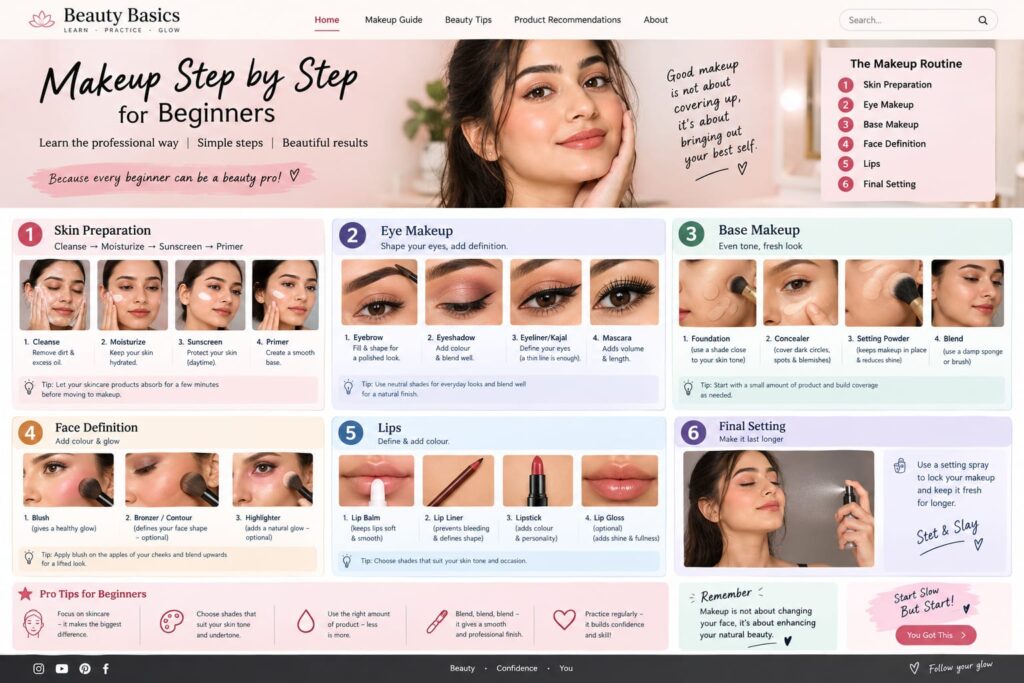
A professional makeup application follows a structured process. Each stage prepares the face for the next, helping makeup look smooth and stay in place.
| Professional Makeup Stage | Key Products | Why It Matters |
|---|---|---|
| Skin analysis and preparation | Cleanser, moisturiser, sunscreen | Helps choose suitable products |
| Base preparation | Primer, corrector | Smooths texture and improves makeup wear |
| Complexion work | Foundation, concealer, powder | Creates an even, natural-looking base |
| Face definition | Blush, bronzer, contour, highlighter | Adds shape, warmth, and dimension |
| Eye and brow makeup | Brow product, eyeshadow, liner, mascara | Frames and enhances the eyes |
| Lip makeup and finishing | Lip liner, lipstick, setting spray | Completes and sets the makeup look |
Essential Makeup Products and Tools for Beginners
Professional makeup artists do not rely on a large collection of products. They choose the right products and tools for the skin type, required finish, and occasion.
Essential Face Makeup Products
- Cleanser and moisturiser
- Sunscreen for daytime makeup
- Primer
- Colour corrector
- BB cream, skin tint, or foundation
- Concealer
- Loose powder or compact powder
- Blush, bronzer, contour, and highlighter
Essential Eye and Lip Makeup Products
- Brow pencil, brow powder, or brow gel
- Neutral eyeshadow palette
- Kajal or eyeliner
- Mascara
- Lip balm
- Lip liner
- Lipstick, lip tint, or gloss
Basic Tools Every Makeup Student Needs
- Beauty sponge
- Foundation brush
- Powder brush
- Blush and contour brush
- Eyeshadow blending brush
- Flat eyeshadow brush
- Spoolie
- Disposable mascara wand
- Clean towel and sanitising products
[Visual suggestion: Professionally organised makeup kit with labelled brushes, complexion products, eye products, and hygiene essentials.]
Step One: Analyse the Skin Before Applying Makeup
A professional makeup artist begins by observing the client’s skin type, texture, undertone, concerns, and preferred finish. This step helps prevent product mismatch and uneven makeup.
Dry skin usually needs hydration-focused products. Oily skin may need lightweight, oil-controlling formulas, while combination skin often needs different products in different facial areas.
Basic Makeup Step by Step: Professional Application Method
Step 1: Cleanse, Moisturise, and Apply Sunscreen
Clean skin is essential for smooth makeup application. Use a gentle cleanser to remove oil, dirt, and previous product residue.
Apply moisturiser according to skin type. For daytime looks, apply sunscreen before makeup and allow each product to absorb completely.
Step 2: Apply Primer Based on Skin Needs
Primer creates a smoother surface and can improve makeup longevity. A hydrating primer suits dry skin, while a mattifying primer can help control shine.
Apply primer mainly where it is needed, such as the T-zone, enlarged pores, or textured areas. Avoid using too much product.
Step 3: Correct Uneven Skin Tone if Required
Colour correction is an important professional makeup technique. It helps neutralise concerns before foundation is applied.
Use peach or orange corrector for dark circles, green corrector for redness, and yellow corrector for dullness or uneven tone. Blend a thin layer before applying base makeup.
Step 4: Apply Foundation for a Seamless Base
Choose a foundation that matches the skin tone and undertone. Test shades on the jawline and check them in natural light.
Apply foundation in thin layers from the centre of the face outward. Blend into the hairline, jawline, ears, and neck for a natural finish.
Step 5: Conceal and Brighten
Use concealer to cover dark circles, pigmentation, blemishes, or redness. Apply only where additional coverage is required.
For under-eyes, use a concealer that is close to the foundation shade or slightly brighter. Pat gently with a sponge or brush for a smooth finish.
Step 6: Set the Base With Powder
Powder sets cream products and helps reduce unwanted shine. Use loose powder for a soft finish or compact powder for quick touch-ups.
Focus on the under-eye area, sides of the nose, forehead, and chin. Do not over-powder dry or textured areas.
Step 7: Add Shape With Bronzer and Contour
Bronzer adds warmth to the complexion, while contour creates the look of natural shadows. These products should be applied subtly and blended carefully.
Apply bronzer around the forehead, cheek area, and jawline. Apply contour beneath the cheekbones, along the jawline, and lightly around the nose if appropriate.
Step 8: Apply Blush and Highlighter
Blush adds freshness and healthy colour to the face. Apply it to the cheeks and blend upward toward the temples for a lifted appearance.
Highlighter can be applied to the cheekbones, brow bone, and inner corners of the eyes. Keep the glow soft for natural or daytime looks.
[Visual suggestion: Face-chart visual showing professional placement for blush, bronzer, contour, and highlighter.]
Step 9: Define the Brows
Brows frame the face and help create balance. Brush the brow hairs upward, then fill sparse areas using light, hair-like strokes.
Choose a brow shade that is close to the natural hair colour. Avoid creating dark, harsh, or overly symmetrical brows.
Step 10: Create Simple Eye Makeup
For beginner eye makeup, use three neutral shades: light, medium, and deep. Apply the light shade over the lid, the medium shade in the crease, and the deeper shade at the outer corner.
Blend the colours carefully so there are no visible lines. Professional eye makeup is defined by clean blending rather than excessive product.
Step 11: Apply Kajal, Eyeliner, and Mascara
Use kajal for a soft definition or eyeliner for a more structured look. Beginners should practise creating thin lines before attempting a winged eyeliner style.
Apply mascara from the roots to the tips of the lashes. Use disposable wands when working professionally on clients.
Step 12: Complete the Look With Lip Makeup
Apply lip balm if the lips are dry. Use lip liner to define the shape, then apply lipstick, gloss, or lip tint.
A professional artist selects lip colours according to skin tone, outfit, occasion, and the intensity of the eye makeup.
Step 13: Set the Makeup for Long Wear
Setting spray helps makeup appear more seamless and improves its staying power. Mist lightly across the face from a distance.
For bridal, wedding, and long-event makeup, setting techniques are especially important. Products should be layered correctly for durability without creating a heavy finish.
Professional Makeup Techniques for Beginners
Learning the correct techniques is more valuable than owning many products. These are essential skills taught in a professional makeup academy.
- Analyse skin type before selecting products.
- Match foundation to the neck and undertone.
- Use thin layers for a natural, buildable base.
- Blend cream products before setting with powder.
- Use clean and sanitised makeup tools.
- Balance the eyes, cheeks, and lips in every look.
- Adapt makeup techniques to face shape and skin texture.
- Choose products according to the event, lighting, and duration.
- Practise colour correction for professional base makeup.
- Record your work through clean, well-lit portfolio photographs.
Common Makeup Mistakes Beginners Should Avoid
Skipping Skin Preparation
Makeup cannot look smooth on dehydrated or unprepared skin. Proper skincare is the first step in every professional makeup routine.
Selecting the Wrong Foundation Shade
Testing foundation on the hand often gives an incorrect result. Always check the shade along the jawline in natural light.
Applying Too Much Product
Heavy makeup is difficult to blend and may crease or crack. Professional artists build coverage slowly with thin layers.
Ignoring Hygiene
Dirty brushes, sponges, and makeup products can affect both skin health and makeup quality. Hygiene is essential when working on yourself or clients.
Not Blending Face and Eye Makeup
Visible contour lines, harsh blush, and unblended eyeshadow reduce the finish of a look. Blending is one of the most important makeup techniques for beginners.
How Basic Makeup Skills Grow into Professional Makeup Artistry

Basic makeup is the foundation for every advanced technique. Once students master skin preparation, base makeup, blending, and color balance, they can progress to specialized looks.
Bridal Makeup Step by Step
Bridal makeup requires advanced skin preparation, color correction, long-wear base techniques, waterproof eye makeup, and a detailed understanding of photography lighting.
Wedding Makeup Step by Step
Wedding makeup for clients and guests should remain polished, comfortable, and long-lasting. The right products depend on the event timing, climate, outfit, and personal style.
Night Makeup Step by Step
Night makeup allows for deeper eyeshadow, defined liner, fuller base coverage, and stronger lip colours. The key is maintaining balance between the eyes and lips.
Summer Makeup Step by Step
Summer makeup needs lightweight textures, sweat-resistant products, sunscreen, and minimal layering. Cream formulas and setting spray can help maintain a fresh finish.
Winter Makeup Step by Step
Winter makeup needs hydration-focused skin preparation. Cream-based products and a radiant foundation finish can prevent makeup from looking dry or flaky.
Learn Makeup From Industry Professionals
At [Academy Name], our courses are designed for students who want more than basic online tutorials. We focus on practical learning, professional standards, and the confidence required to work with real clients.
Our makeup training includes:
- Basic to advanced makeup techniques
- Professional skin analysis and product selection
- Foundation matching and colour theory
- Party, night, bridal, and wedding makeup
- Eye makeup, eyeliner, and lash application
- Makeup hygiene and professional kit setup
- Client consultation and portfolio development
- Practical demonstrations and guided practice
Turn your passion for makeup into a professional skill.
CTA Button Text: Explore Our Professional Makeup Courses
Secondary CTA: Book a Course Consultation
Frequently Asked Questions
What are the essential makeup steps for a complete beginner?
The essential steps are skin preparation, primer, foundation, concealer, powder, blush, brows, eye makeup, mascara, lip colour, and setting spray.
What is the correct order to apply makeup?
Apply skincare first, followed by sunscreen, primer, corrector, foundation, concealer, powder, face products, eye makeup, lip colour, and setting spray.
What does a beginner learn at a professional makeup academy?
A beginner learns skin analysis, product selection, base makeup, colour correction, eye makeup, face shaping, hygiene, client handling, and practical application skills.
How do professional makeup artists make makeup last longer?
They prepare the skin correctly, choose suitable products, apply thin layers, set cream products with powder, and use setting spray.
Can I learn bridal makeup after learning basic makeup?
Yes. Basic makeup techniques are the foundation for bridal makeup. Once you understand skin preparation, base work, blending, and colour theory, you can progress to bridal artistry.
About the Writer
Kanishka Pal is a professional makeup artist and beauty educator at Neha Makeup Academy. She specializes in teaching aspiring artists the practical techniques, hygiene standards, and creative skills needed to build confidence in professional makeup artistry.
Written by: Kanishka Pal
Professional Makeup Artist and Educator, [Neha Makeup Academy]
Reviewed by: [Senior Artist Name], [Academy Name]